Source transparent crystal glass ball for Souvenir, Home Decoration, Business Gift
Compare 30 transparent crystal glass ball options from verified suppliers. Products feature carved, polished, or engraved techniques with sizes ranging from 30mm to 1000mm for various applications including souvenirs, home decoration, and business gifts.
Key considerations
Products List






Comprehensive Sourcing Guide
Strategic Sourcing Guide for Transparent Crystal Glass Balls
Understanding Product Variants and Technical Specifications
The procurement of transparent crystal glass balls requires a nuanced understanding of the diverse technical specifications available in the global market. The core keyword "transparent crystal glass ball" often encompasses a wide spectrum of products ranging from small decorative items to large-scale industrial components. Based on current market observations, the product attributes vary significantly in terms of material composition, clarity, and dimensional standards. Buyers must first distinguish between products labeled as "Artificial Crystal" and those made from "Float Glass," as these materials offer different optical properties and structural strengths.
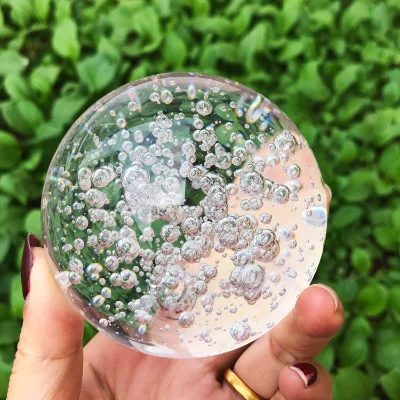
The market data indicates that clarity is a critical differentiator. High-end segments often feature products with "VVS" (Very Very Slightly Included) clarity, which is essential for applications requiring high light refraction and aesthetic purity. In contrast, other listings describe clarity simply as "Transparent" or "IColor:Transparent," which may suit functional or bulk decorative needs. The shape is predominantly "Round," but variations exist, such as spheres with internal "Bubbles" or specific models like the "120BU" and "50NB" which denote specific manufacturing lines or size categories.
Size is another paramount specification. The observed range spans from small items measuring 30mm to massive industrial units reaching up to 1000mm. Specific size types noted in the market include 50mm, 60mm, 70mm, 80mm, 90mm, 120mm, and 150mm. The "Size Type" classification often dictates the intended use; for instance, a 120mm ball is frequently categorized under "big glass ball" standards, while smaller variants like 30mm to 50mm are often grouped as "Small" or "color glass ball" standards. The production technique also varies, with options including "Carved / Engraved" for artistic pieces and "Polished" finishes for smooth, reflective surfaces. Understanding these specific technical parameters is the first step in aligning a procurement strategy with the intended application, whether it be for a high-end wedding souvenir or a scientific instrument component.
Compliance, Certification, and Material Standards
When sourcing transparent crystal glass balls, verifying compliance and material standards is non-negotiable for B2B buyers. The supply chain for glass products is heavily regulated, particularly regarding environmental safety and manufacturing quality. The market data reveals that suppliers may hold certifications such as ISO9001, ISO14001, and Ts16949. These certifications indicate a commitment to quality management systems, environmental management, and automotive industry-specific quality standards, respectively. However, buyers must verify that these certifications are current and applicable to the specific product line being ordered, as certification status can vary between different manufacturing facilities within the same supplier organization.
Material safety is another critical compliance area. Products are often marketed with "Environmental" security attributes, suggesting they are free from hazardous substances. For applications involving food service, home decoration, or children's souvenirs, this attribute is vital. The origin of the product, frequently listed as "China" or specifically "Zhejiang, China," provides context for the regulatory environment the manufacturer operates under. While the data confirms the existence of these certifications and origin points, it does not guarantee that every listed product batch meets these standards. Therefore, procurement teams must request valid, up-to-date certification documents for each specific order before finalizing a contract.
Standardization in the glass ball industry is often defined by the physical dimensions and the "prod_standard" classification. The market lists standards ranging from "30mm" to "1000mm," and specific classifications like "big glass ball" or "color glass ball." These standards serve as a baseline for quality control but do not replace the need for specific product testing. Buyers should ensure that the supplier's internal quality control processes align with international standards for glass manufacturing, particularly regarding surface defects, dimensional tolerance, and optical clarity. The absence of a universal global standard for "crystal glass ball" means that the buyer must define their own acceptance criteria based on the specific "prod_standard" provided by the supplier and validate it through sample testing.
Cost Drivers and Pricing Dynamics
The pricing of transparent crystal glass balls is influenced by a complex interplay of factors, including material costs, manufacturing techniques, and logistical requirements. The observed price range in the market spans from $0 to $3,500 USD, a vast disparity that reflects the diversity of the product category. At the lower end of the spectrum, prices likely correspond to small, mass-produced items with simple "Polished" techniques and standard "Float Glass" materials. Conversely, the upper end of the price range is associated with large-diameter balls (e.g., 1000mm), high-clarity "VVS" grades, and intricate "Carved / Engraved" designs that require significant labor and specialized equipment.
Material composition is a primary cost driver. "Artificial Crystal" often commands a premium over standard "Float Glass" due to its superior refractive index and aesthetic appeal. Similarly, the inclusion of features like internal bubbles or specific color treatments can increase production costs. The manufacturing technique also plays a significant role; "Carved / Engraved" processes are more labor-intensive and time-consuming than simple "Polishing," directly impacting the unit price. Furthermore, the "prod_packing" method affects the final cost. Options such as a "Gift Box with Base" or "Simple White Box" add to the packaging expenses, while "Bulk+Plastic Bag+Standard Carton/Pallet" represents a more economical approach for industrial buyers.
Minimum Order Quantity (MOQ) is another critical factor influencing the effective cost per unit. The observed MOQ range is extensive, spanning from 1 to 100,000 units. Small orders, often suitable for prototyping or small business gifts, may carry a higher per-unit cost due to the setup and handling fees associated with low-volume production. Large orders, potentially reaching 100,000 units, benefit from economies of scale, reducing the per-unit price significantly. Buyers must balance their inventory needs with their budget constraints, considering that the optimal MOQ may vary depending on the specific model, such as the "120BU" or "LSCB-003." Additionally, payment terms like "T/T, Western Union, Paypal" and shipping methods ("by Air, Sea or Courier") will influence the total landed cost, with air freight being significantly more expensive than sea freight for large or heavy glass items.
Typical Applications and Usage Scenarios
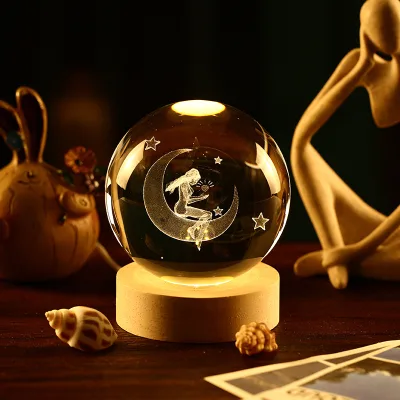
The versatility of transparent crystal glass balls makes them suitable for a wide array of applications, ranging from personal gifting to industrial utility. The market data highlights several distinct usage categories that buyers should consider when selecting the appropriate product variant. One of the most common applications is as a "Souvenir" or "Business Gift." These items are often customized with logos using "Sandblasting, 3D Laser Engraving, Print" techniques, making them ideal for corporate branding events, trade shows, and client appreciation gifts. The "Theme: Love" and "Holiday: Wedding" attributes suggest a strong market presence in the wedding industry, where glass balls serve as centerpieces, favors, or decorative elements.
Beyond gifting, these products are widely used for "Home Decoration." The "Round" shape and "Transparent" nature of the balls allow them to blend seamlessly into various interior design styles, from modern minimalist to classic elegance. The "Style: Simple" attribute supports their use in contemporary settings, while "Carved / Engraved" variants cater to more traditional or artistic interiors. In the commercial sector, the "Usage: Restaurant, Antique, Scientific, Artistic" indicates that glass balls are utilized in hospitality for table settings, in museums for antique displays, and in scientific laboratories for specific applications. The "Application: Home" and "Appliaction: Valves for Chemical" entries suggest that some variants are engineered for functional purposes, potentially serving as components in chemical processing or scientific instrumentation where transparency and chemical resistance are required.
The "Type of Products: Craft" classification underscores the artistic value of these items. They are often used in art collections, where the "Art & Collection" usage category is prominent. The ability to customize the "Logo" and the variety of "Technique" options allow artisans and designers to create unique pieces that stand out in the market. Whether used as a standalone decorative object or as part of a larger installation, the transparent crystal glass ball offers a high degree of flexibility. Buyers must align the specific product attributes, such as size, clarity, and technique, with the intended application to ensure the product meets the functional and aesthetic requirements of the end-user.
Supplier Evaluation and Quality Assurance
Evaluating suppliers for transparent crystal glass balls requires a rigorous approach to ensure product consistency and reliability. The market data indicates that suppliers are located primarily in China, with specific mentions of "Zhejiang, China" as a manufacturing hub. While this provides a geographical context, buyers must look beyond location to assess the supplier's capabilities. Key evaluation criteria include the supplier's ability to meet specific "prod_standard" requirements, their adherence to "ISO9001/ISO14001/Ts16949" certifications, and their track record in delivering products with the specified "Clarity" and "Material" attributes.
Quality assurance is paramount, especially given the fragile nature of glass products. Buyers should verify the supplier's quality control processes, including inspection protocols for surface defects, dimensional accuracy, and optical clarity. The "Security: Environmental" attribute suggests that suppliers should have measures in place to ensure product safety, but this must be validated through third-party testing or on-site audits. The "prod_packing" options, ranging from "Gift Box" to "Bulk+Plastic Bag+Standard Carton/Pallet," also serve as an indicator of the supplier's attention to detail. A supplier offering robust, protective packaging is more likely to have a comprehensive quality management system in place to prevent damage during transit.
Furthermore, the supplier's ability to handle customization is a critical factor. The availability of "Customization: Available" and various logo application methods like "Sandblasting" and "3D Laser Engraving" indicates that the supplier has the necessary technical capabilities. However, buyers should request samples to verify the quality of these customizations before placing a large order. The "Payment" and "Shipment" terms, such as "T/T, Western Union, Paypal" and "by Air, Sea or Courier," should be reviewed to ensure they align with the buyer's risk management strategies. A reliable supplier will offer flexible payment terms and transparent shipping options, ensuring that the goods arrive on time and in perfect condition.
Long-Term Procurement Considerations
Sourcing transparent crystal glass balls is not merely a transactional activity but a strategic decision that impacts long-term business operations. Buyers should consider the scalability of their supply chain, the potential for future customization, and the stability of the supplier relationship. The wide range of "Size Type" options, from 30mm to 1000mm, suggests that a single supplier may be able to meet evolving needs as the buyer's product line expands. However, buyers must verify that the supplier can maintain consistent quality across different sizes and specifications, as larger balls may present unique manufacturing challenges compared to smaller ones.
Sustainability and environmental compliance are increasingly important in long-term procurement strategies. The "Security: Environmental" attribute and the presence of "ISO14001" certification indicate that some suppliers are committed to sustainable practices. Buyers should prioritize suppliers who demonstrate a clear commitment to environmental responsibility, as this aligns with corporate social responsibility goals and may reduce regulatory risks. Additionally, the "prod_origin" and "prod_standard" data should be monitored for any changes that could affect the supply chain, such as shifts in manufacturing locations or updates to industry standards.
Finally, buyers should plan for the lifecycle of the product. The "Usage" categories, including "Souvenir," "Home Decoration," and "Business Gift," suggest that these products may have seasonal demand fluctuations. Buyers should work with suppliers who can manage inventory levels and adjust production schedules to meet peak demand periods, such as the "Wedding" season or holiday gift-giving periods. By establishing a long-term partnership with a reliable supplier, buyers can ensure a steady supply of high-quality transparent crystal glass balls, minimizing disruptions and maintaining the integrity of their brand reputation. The ability to customize and the variety of technical options available provide a strong foundation for a flexible and resilient procurement strategy.
FAQs
What customization options are available for logo application?
Customization is available with options including sandblasting, 3D laser engraving, and print. Buyers can choose from these techniques to apply logos on the glass ball surface for branding purposes.
Which materials are used to manufacture these transparent crystal glass balls?
The products are manufactured using Artificial Crystal and Float Glass materials. These materials provide different optical properties and structural strengths suitable for various decorative and industrial applications.
What are the standard size types available for these glass balls?
Standard size types range from 30mm up to 1000mm, including specific models like 50mm, 120mm, and 150mm. The size type often dictates the intended use, such as souvenirs or large decorative pieces.
Can buyers find products with high clarity ratings like VVS?
Yes, high-clarity products with VVS ratings are available in the market. This clarity level is essential for applications requiring high light refraction and aesthetic purity, distinguishing them from standard transparent options.
What certifications do the manufacturers typically hold for quality assurance?
Manufacturers often hold ISO9001, ISO14001, and Ts16949 certifications. These indicate adherence to quality management, environmental management, and automotive industry-specific standards, though buyers should verify current status for specific orders.
How are the products packed for shipment to ensure safety?
Packing options include gift boxes with bases, simple white boxes, or bulk packaging with plastic bags and standard cartons. Robust packaging is used to prevent damage during transit for fragile glass items.
Which payment methods and shipping options are accepted by suppliers?
Accepted payment methods include T/T, Western Union, and Paypal. Shipping can be arranged by air, sea, or courier depending on the order size and urgency required by the buyer.